It has been five years since I last interviewed because I’ve been enjoying my current job so much. However, in January of this year, I decided to interview and ended up receiving two offers: one for a Senior Engineer position and another for a Tech Lead role. I’ll be starting my new journey in July, saying goodbye to the workplace I’ve been with for quite a long time.
Ultimately, I chose the Senior Engineer offer. Even though the Tech Lead offer was 1 million JPY (approx. $6,400 USD) higher than the one I accepted, I’m still a kid at heart and value my leisure time. I want to have enough time to play games, watch movies, and go out for drinks. I opted for the Senior Engineer role over the Tech Lead position because I didn't want to be overwhelmed by work responsibilities.
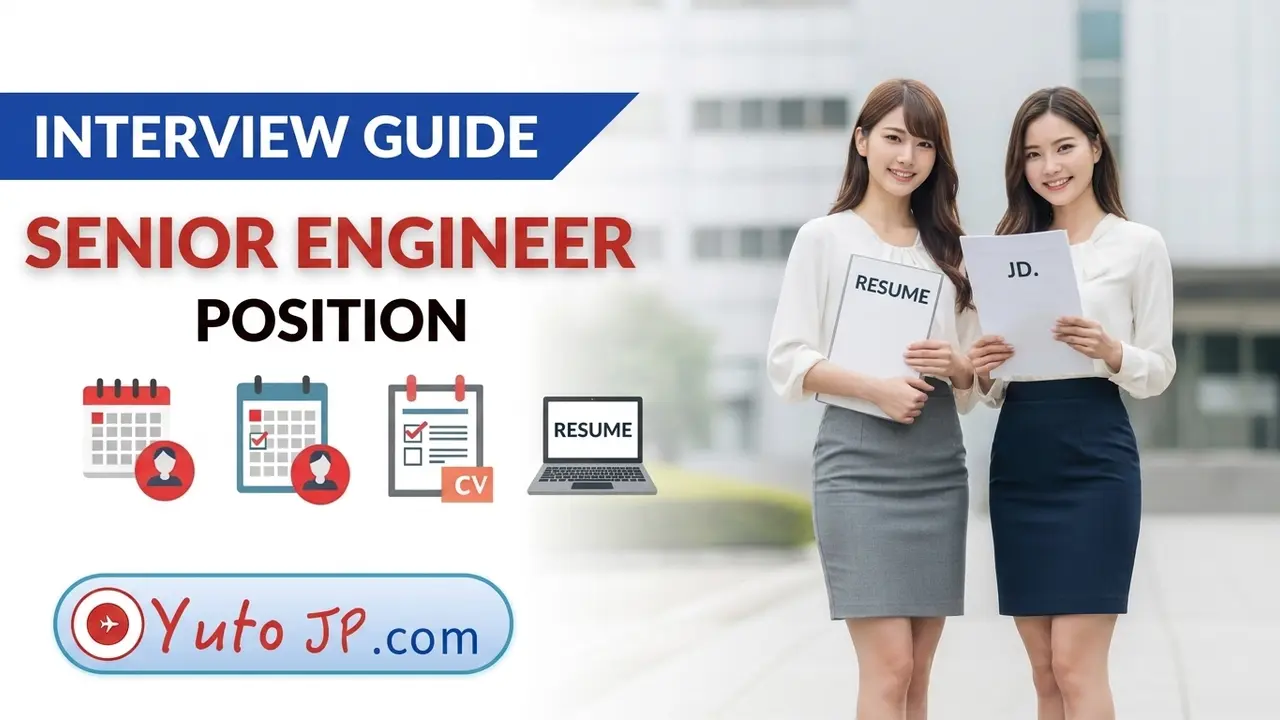
This post is a bit long, but I wanted to share my experience—from the moment I decided to interview to receiving and declining offers, and even negotiating an offer six months in advance. I hope this can serve as a helpful reference for any Junior developers looking to step up into a Senior Engineer role.
How It All Started
I didn’t necessarily set out with the goal of changing jobs this year, as my current work environment is very comfortable and flexible. One day, I just happened to log back into LinkedIn to update my profile after leaving it blank for years, adding some certifications I had recently earned. I didn't even set my status to "Open to Work." However, starting the next day, recruiters (mostly English speakers since my profile is in English) began sending me Job Descriptions (JDs).
Since my initial goal wasn't to switch jobs, I wasn't very interested in the JDs at first. But then I realized it had been five years since I last interviewed anywhere, and I wanted to see if I had actually reached a Senior level of expertise. So, I decided to give it a shot—this was my first time interviewing for a Senior position.
Choosing the Right Recruiters
Despite living in Japan, I really enjoy working in a global environment with many expats where I can use English (even though I’ve forgotten quite a bit of it). Therefore, I reviewed the profiles of the recruiters who messaged me, looked over the JDs they sent, and narrowed it down to two main recruiters: one American and one Japanese, both from global-looking agencies.
Selecting Companies and Positions
To avoid wasting anyone's time, it was important to be clear about expectations from the start, especially regarding minimum salary and start dates. I discussed my preferences with the recruiters, such as a preference for remote work, flexible hours, the ability to work remotely from Vietnam for short periods, a diverse international environment, and most importantly, the tech stack and technologies I wanted to work with.
The recruiters filtered based on these criteria and sent back several suitable JDs. When reading JDs, I prioritize the work environment, benefits, and tech stack, followed by information about the company and the specific project. I ended up choosing about 10 companies to apply to. I chose a larger number so that I could narrow them down as I progressed through the rounds. 😂
The Interview Process
I won't dive into the basics like "Why are you changing jobs?" or "Why our company?" since those are common knowledge. Instead, I'll focus on the technical aspects of the interviews. All my interviews this time were conducted online. Every company has a different process, but they generally follow this structure:
The Application Stage
Only qualified resumes move forward. I was rejected by a few companies because my 履歴書 (Resume) and 職務経歴書 (Work History) didn't show enough experience for the desired position or salary level.
Casual Interview
This is an optional, informal chat for the candidate and employees to communicate naturally and exchange information before the formal hiring process begins. This isn't a high-pressure interview, so your demeanor and attire don't have to be strictly formal. If either side feels it's not a good fit after this chat, the process can end right there.
Round 1 Interview
Usually with a Team Lead and an Engineer. After introductions, the company presents the project and business. Then, the candidate presents their experience and contributions in past projects, as well as their future career goals. This is followed by some fairly challenging technical questions.
Round 2 Interview
Usually with an Engineering Manager or a Senior Engineer. In this round, they don't spend as much time on company overview since that was covered in Round 1. Instead, they focus heavily on technical depth, problem-solving within projects, project management experience, and team management. The technical questions in this round are also very difficult.
The Technical Test
In my experience, this usually takes one of the following forms: - A take-home project with a list of allowed languages and frameworks. For example, building an API for a movie site or an e-commerce platform. - A live coding test or timed challenge in a specific language. - IQ tests, personality tests, or Japanese language proficiency tests (like reading comprehension).
Final Interview
Once you pass the technical tests, you reach the final round, usually with the CEO, a Director, or high-level executives. This round doesn't focus on technical skills but rather on personality, experience, problem-solving approaches, and long-term career vision.
Key Technical Topics for Senior Interviews
The technical questions were quite extensive; I was asked about 20 questions per round. The content revolved around the following areas (and more that I can't quite remember):
- Agile and SCRUM - Version control with Git (e.g., rebase, cherry-pick) - Code Review practices - Databases (e.g., table design for RDBMS) - Architectural patterns like MVC, MVP, and MVVM - Design Patterns - Testing (e.g., TDD, BDD) - Caching strategies - Refactoring - UI/UX principles - CI/CD pipelines - SEO - Sessions and Cookies - Background jobs - Batch jobs - Serverless architecture - Search engines (e.g., Elasticsearch) - Cloud configuration (e.g., designing AWS setups with EC2, ECS, S3, ALB, CDN) - Cloud cost optimization - Performance optimization, SQL tuning, N+1 queries - Security (e.g., SQL injection, XSS)
Accepting and Declining Offers
I’ve never been one to over-prepare or memorize answers for interviews; I prefer to speak my mind. Whatever the result, I accept it gracefully. After a month of interviews, I received two offers. Once the offers are sent, there's usually a follow-up meeting for both sides to say thank you and confirm details.
The deadline to respond is usually one to two weeks. I was very pleased with both offers—both offered flexible hours, full remote work, and the ability to work from Vietnam. I was really torn. Once I made my decision, I emailed my acceptance to one company and sent a polite thank you and decline to the other. I also messaged all the recruiters who assisted me throughout the process.
It’s a mix of emotions—excitement because I’ve proven myself at a Senior level and am starting a new chapter, but also sadness because I’m leaving a place I’ve grown attached to. Plus, my new environment won't have any Vietnamese colleagues. I'm mentally preparing myself for the fact that the new job will likely be much more demanding than my current one.
Hello everyone. I'm an IT engineer working in Japan. I created this blog to share about life and experiences during my study and work journey. I hope this article will be helpful to you.