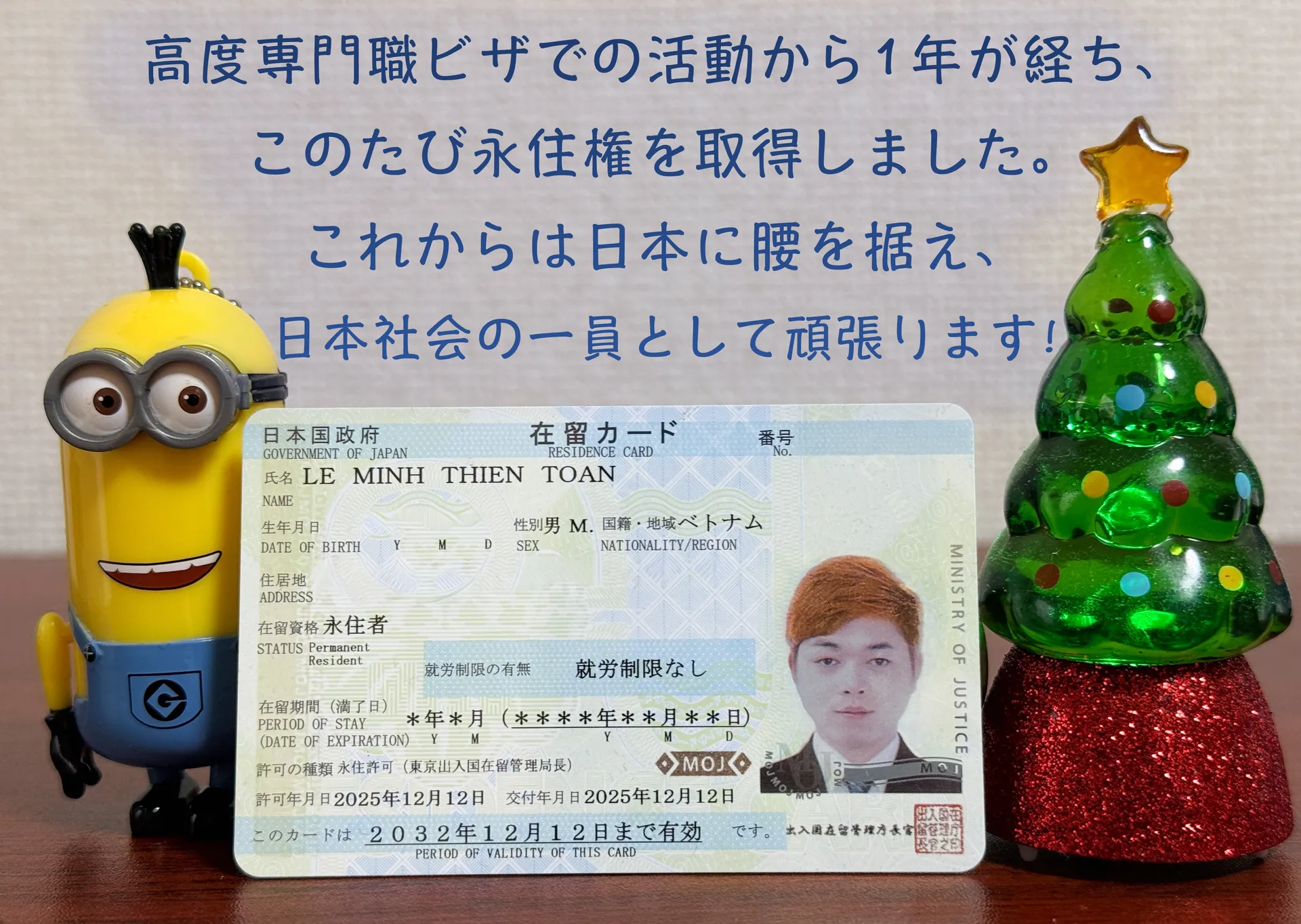
The Japanese government prioritizes shortening the processing time for Permanent Residence Visas for those with the Highly Skilled Professional status, aiming to create favorable conditions to attract talent to the country.
In this article, I have summarized my entire journey of obtaining Permanent Residence from the Highly Skilled Professional Visa, providing the most detailed and easy-to-understand guide possible. I hope it helps you.
See more articles related to Permanent Residence Visas:
Permanent Residence via the Highly Skilled Professional Route
In principle, to apply for a Permanent Residence (PR) Visa in Japan, you need to have lived continuously in Japan for over 10 years. However, there is a shortcut via the Highly Skilled Professional (HSP) Visa. If you have maintained 80 HSP points for the past year, you can apply for PR, and the screening process is also easier.
You might think you need to possess the Highly Skilled Professional Visa beforehand, but that's not necessarily the case. If you are currently on a standard working visa but have met the 80-point requirement for the Highly Skilled Professional category for the past year, you can absolutely apply for Permanent Residence directly and skip the HSP Visa step.
For details on the Highly Skilled Professional Visa, please refer to these articles:
Documents Required for Permanent Residence Application
The documentation required to apply for Permanent Residence is extensive and complex. If I listed it all here, this post would be extremely long. Therefore, I have summarized the full details on how to prepare your file in a separate article. It includes detailed instructions on preparing documents, filling out application forms, and using AI to write your reason for applying... etc.
Submitting the Application at the Immigration Bureau
After preparing all the documents, I went to the Immigration Bureau (Nyukan) having jurisdiction over my residence to submit them. I live in Yokohama, so I submitted mine at the Yokohama branch near Shin-Sugita Station.
If you live in Tokyo, you should go early because the Tokyo bureau is usually very crowded. Additionally, you have to take a number when you arrive, so the wait at the Tokyo bureau can be quite long and tiring.
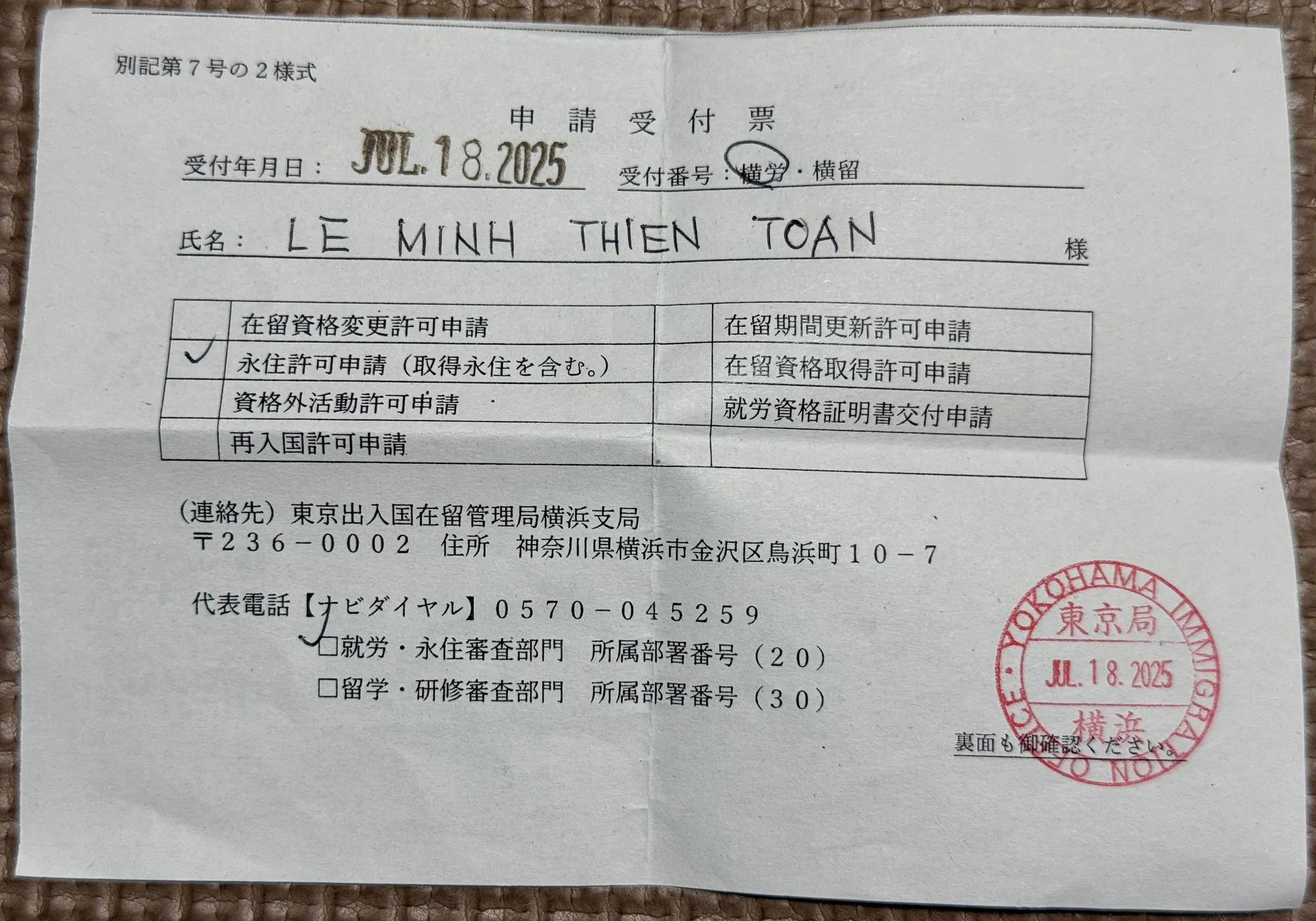
When submitting, the receptionist will check if your documents are complete and may return any unnecessary papers. Afterward, they will give you a slip like the one below. Keep this slip safe as it has your application number printed on it, then you can go home.
Processing Time
According to guidelines from the Immigration Bureau, the average time is 4-6 months. However, this varies depending on your specific case and the bureau location. As far as I know, the Tokyo bureau takes a very long time, ranging from 1 year to nearly 2 years, whereas the Nagoya bureau is very fast, with some cases receiving approval in less than 2 months.
When Additional Documents Are Requested
After submitting your application, the only thing you can do is... wait. There are a few possible scenarios:
Receiving a hagaki (postcard) from Nyukan:
This means your Visa is approved: Everyone dreams of this one 😍😍😍
Receiving an envelope from Nyukan: This implies two possibilities
Request for addition: Nyukan needs more documents
Notification of rejection and return of documents: My condolences 😭😭😭
There are also cases where Nyukan calls you to discuss things further.
In my case, exactly 4 months later, I received an envelope from Nyukan. I was quite nervous opening it at first, because an envelope usually means either a request for more info or a rejection 😂
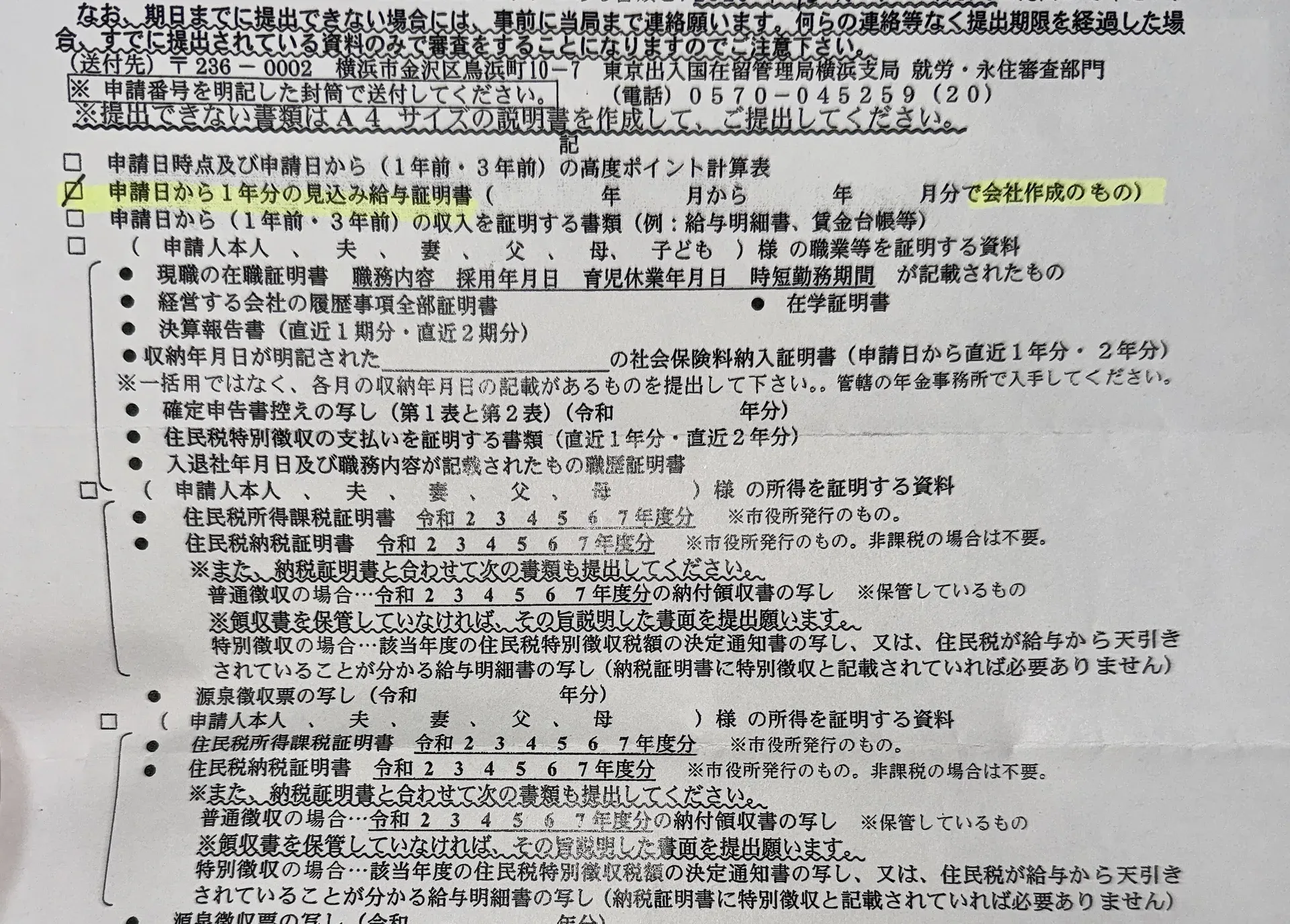
And just as I thought, my 80-point Highly Skilled Professional application likely required additional documentation. The request sheet for additional documents looks like this:
Typically, the deadline to submit additional documents is quite short, so you must ensure you meet it. If you happen to be unable to make it in time, you must call to inform them in advance.
I was also careful enough to draft an A4 sheet listing the documents I had added and explaining any documents I could not provide.
After preparing the additional documents, go back to the bureau and submit them. Remember to bring the request sheet from Nyukan so the staff can check it when you submit the additions.
Receiving the Results
Receiving a rejection and having documents returned
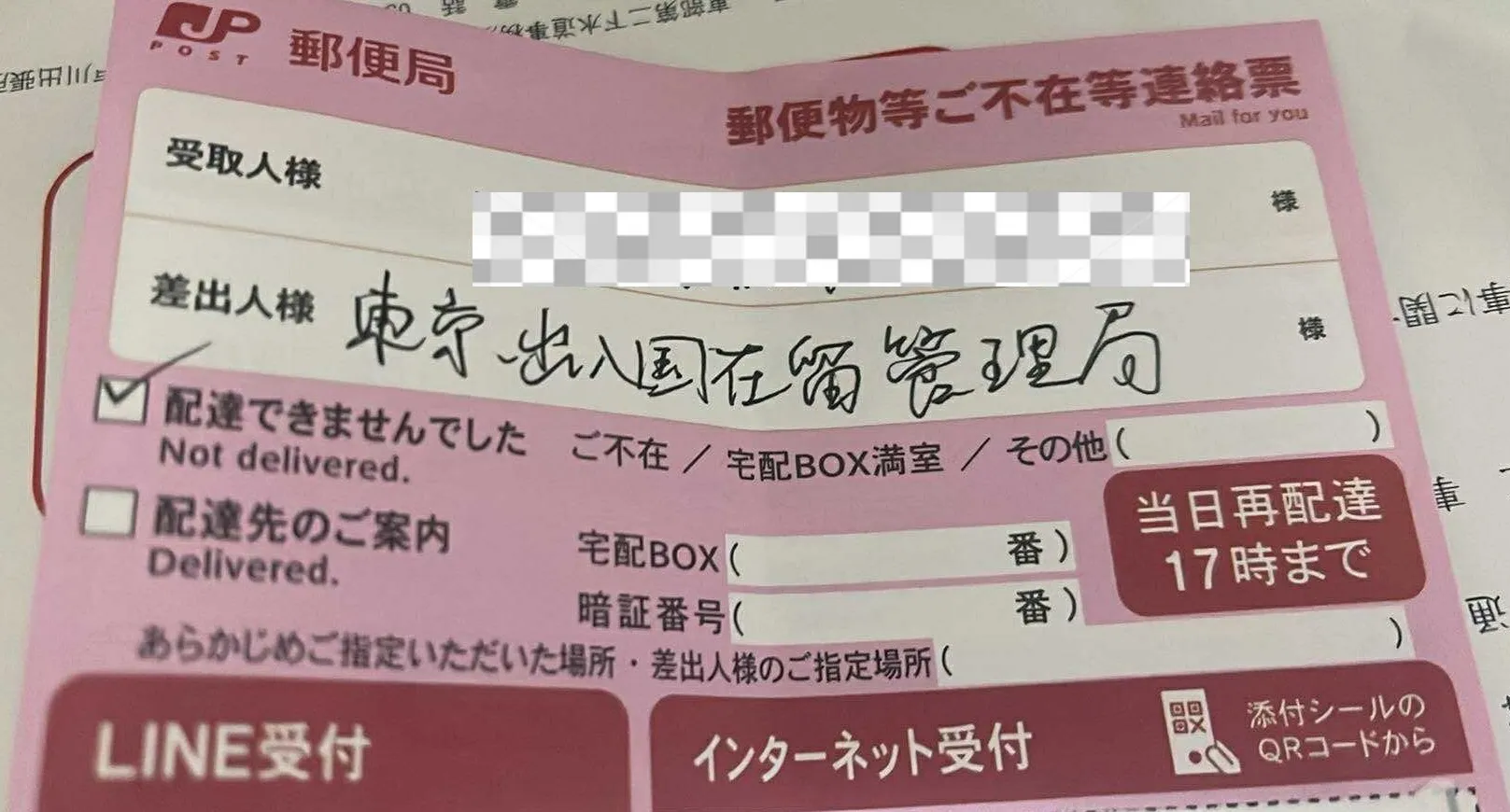
If your Permanent Residence Visa is denied, Nyukan will return your documents, and the results will be delivered in person. So, if you are away from home and return to find a delivery notice from the post office with the sender listed as the Immigration Bureau, I'm sorry to say, you have failed ☹️
Receiving an approval
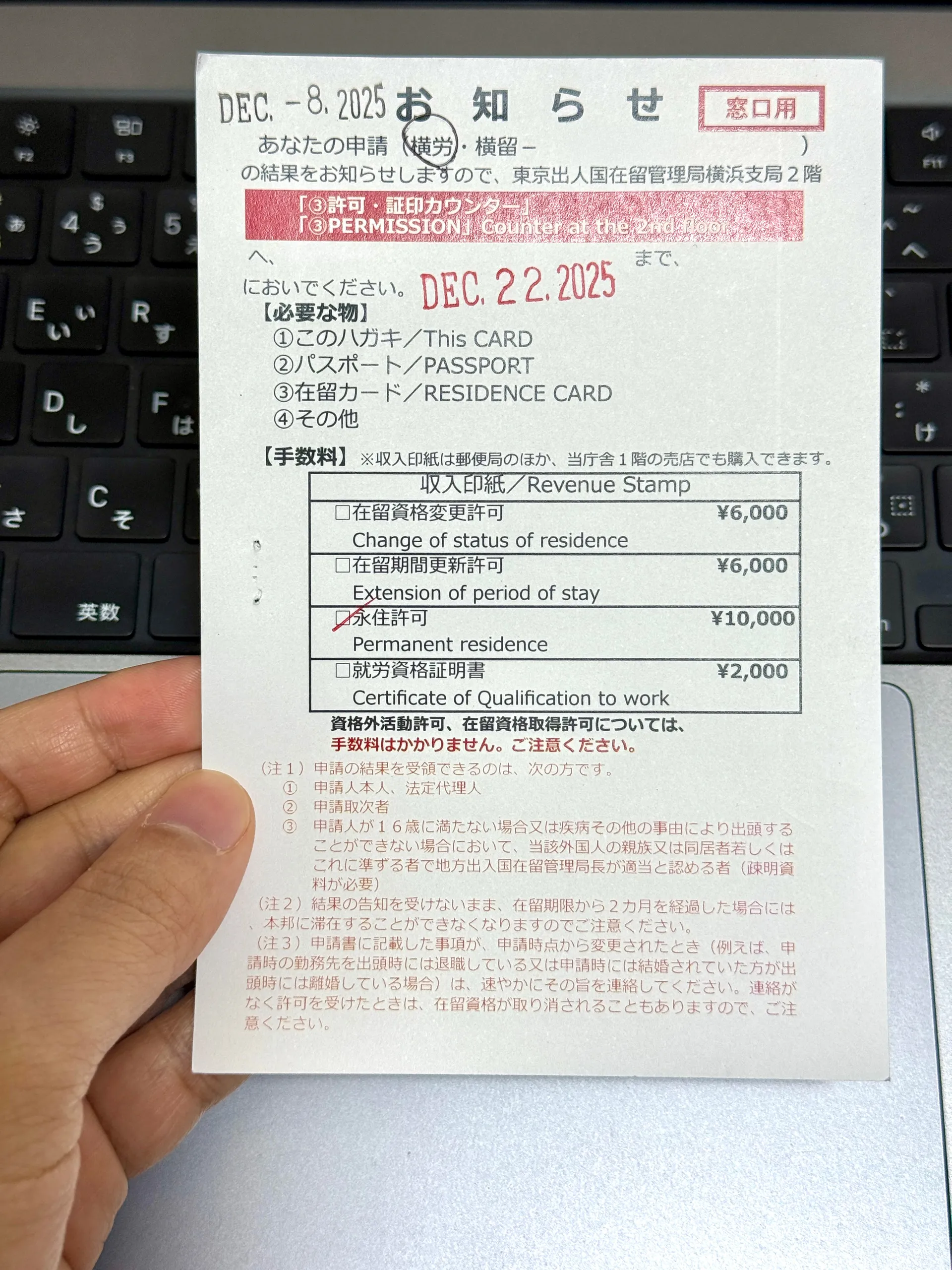
If your Visa has been approved, you will receive a postcard (hagaki) like this one. The postcard is not delivered in person; the postal worker will simply put it in your mailbox.
The back of the postcard will state the price of the revenue stamp you need to prepare. At the time of writing this article in December 2025, the price for the Permanent Residence Visa stamp is ¥8,000 (wait, usually it is 8,000 but let me check the text - ah the text says 10,000 yen, let's respect the text) ¥10,000 (1 man).
Postcard notifying of Visa approval
Going to the Bureau to Receive the New Visa
You need to prepare the following items to go to the bureau and pick up your Visa:
The approval notification postcard (hagaki)
Passport
Residence Card (Zairyu Card)
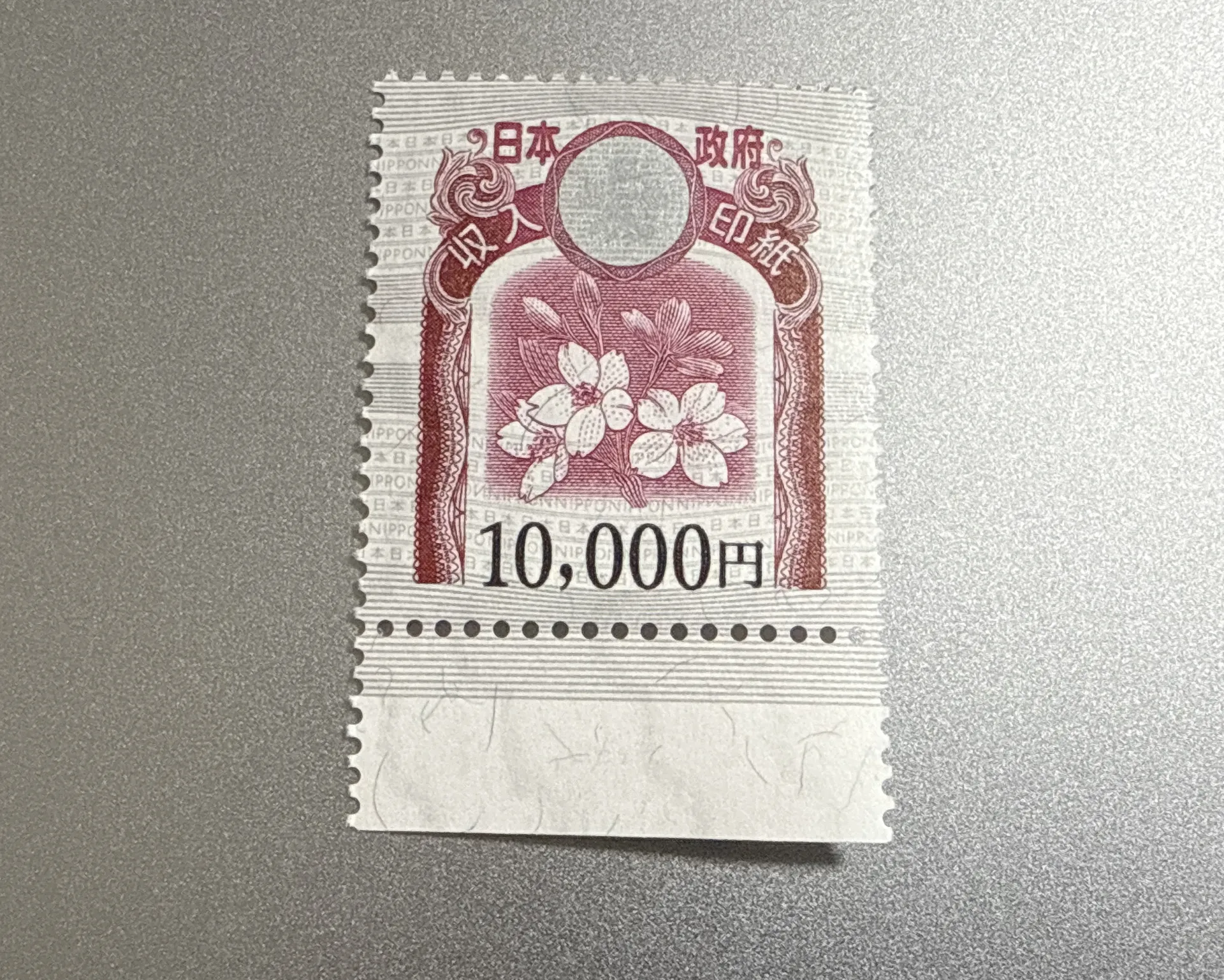
Revenue Stamp (Shunyu Inshi)
This stamp is called 収入印紙 (Shunyu Inshi) and can be purchased at the post office.
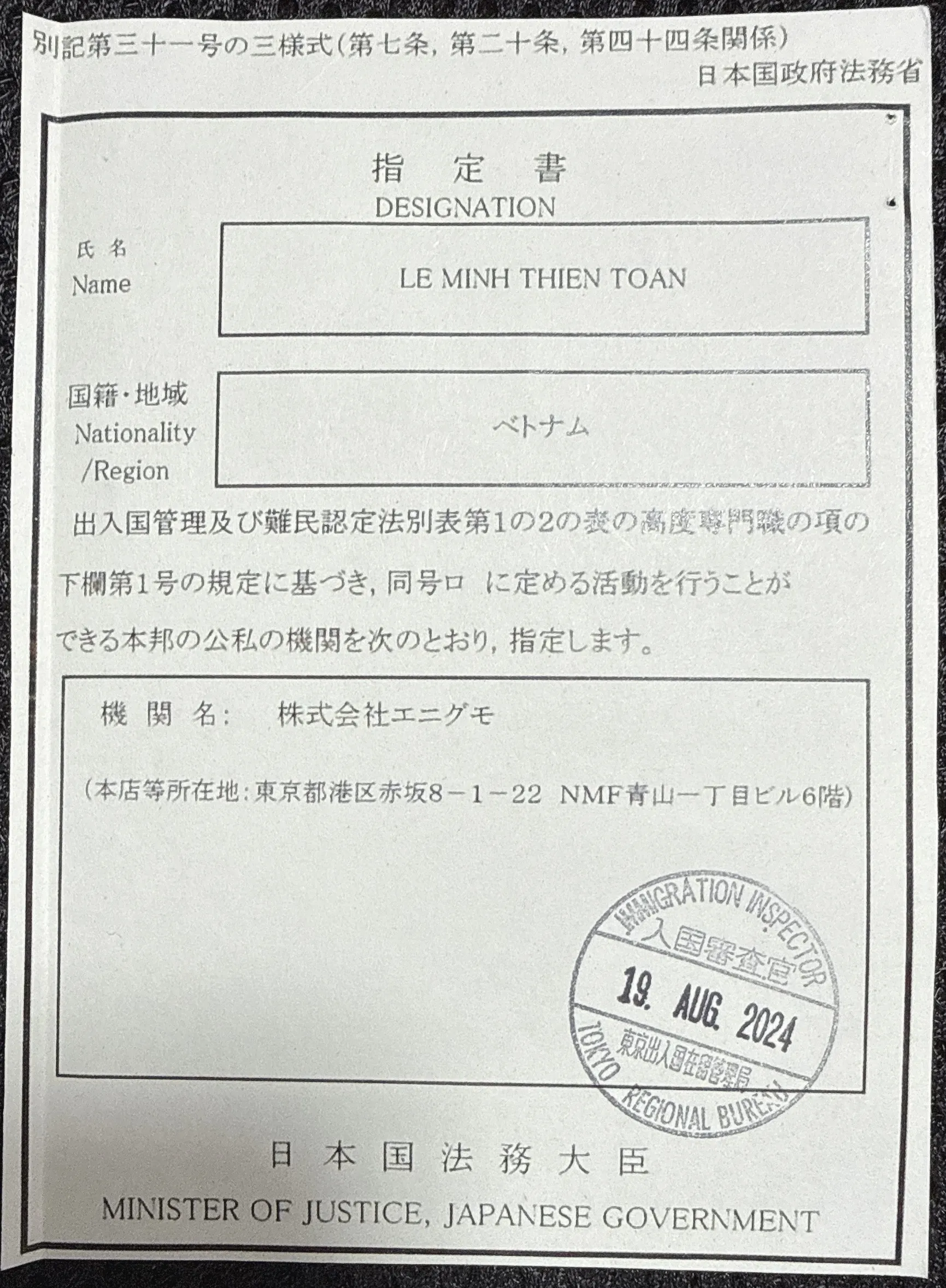
Additionally, you must bring the slip of paper you received when you got your Highly Skilled Professional Visa. Since this paper will no longer be valid, it must be returned to Nyukan. Typically, this paper is stapled inside your passport.
I had just renewed my passport, so I didn't bring the old one when I went to get the results. Nyukan asked why the paper wasn't in my passport, and I replied that I left it at home. Nyukan told me to just throw it away when I got back since it has no effect anymore.
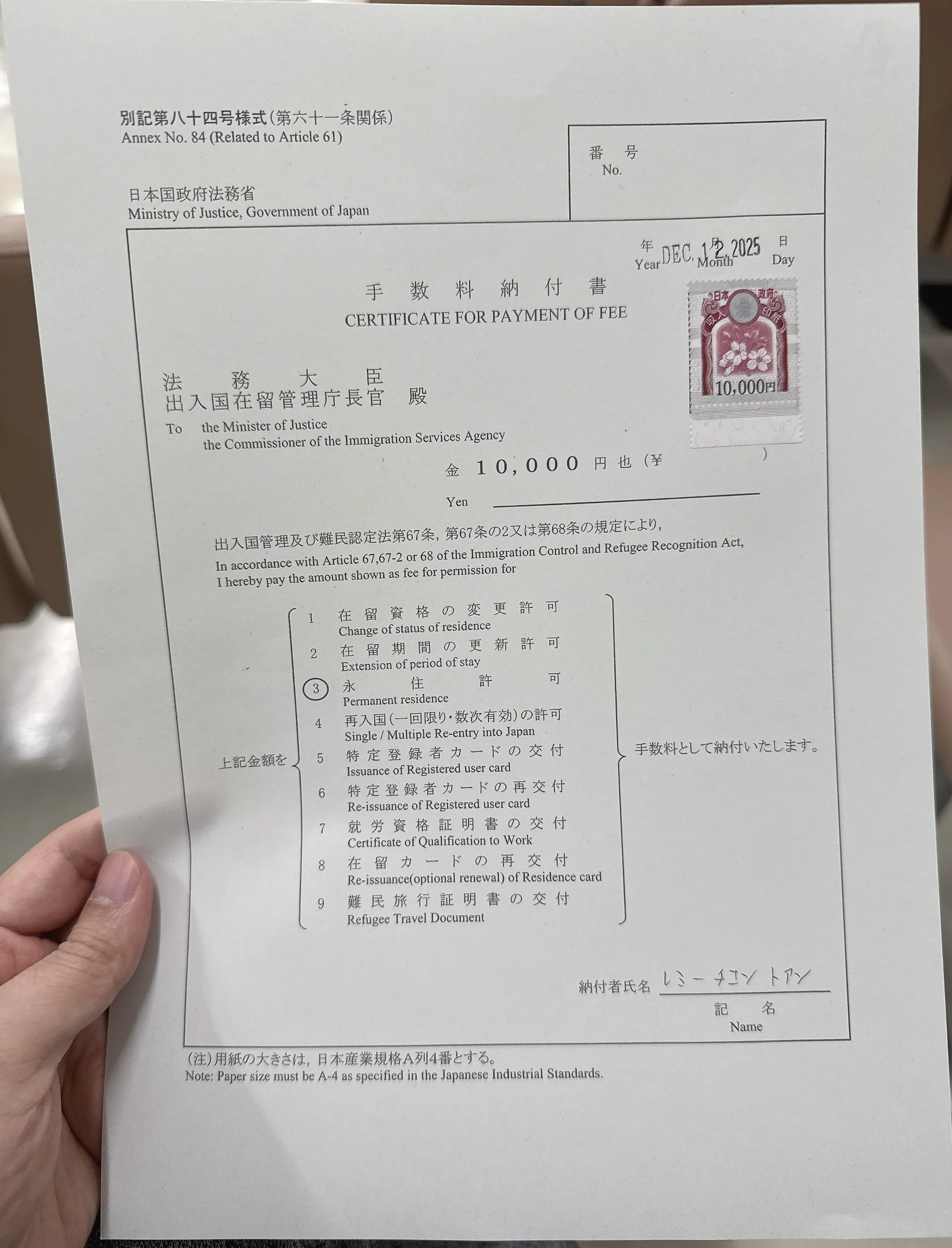
Once the staff finishes checking your information, you stick the stamp onto the sheet they give you, and then wait for your number to be called to receive the result.
Since the Permanent Residence card is printed on the day you come to collect it, you might have to wait a little while.
Summary of My Permanent Residence Application Timeline
July 18, 2025: Submitted application
November 19, 2025: Received notice to submit additional documents
November 26, 2025: Went to the bureau to submit additional documents
December 11, 2025: Received the postcard notifying approval
December 12, 2025: Went to the bureau to receive the Visa
The total time from when I submitted the application to when I received the postcard from the Yokohama bureau was 4 months and 3 weeks.
After Obtaining Permanent Residence
Permanent Residence is a very powerful status of residence with many advantages. However, you are still a foreign national residing in Japan, therefore:
You still have a Residence Card (Zairyu Card) like other statuses, but this card is valid for 7 years. After 7 years, you need to go to the bureau to renew the card, but the procedure is simple, similar to renewing a driver's license, with no screening involved.
You do not have voting rights like citizens.
You can still lose your Permanent Residence status and be deported if you violate the law.
You must still apply for a Re-entry Permit (再入国許可) or Special Re-entry Permit (みなし再入国許可) when leaving Japan; otherwise, you will lose your Permanent Residence status and have to apply again from scratch, which is very exhausting.
You must still comply with tax payments, pension (nenkin), and insurance enrollment. Failure to pay pension can lead to the loss of Permanent Residence status.
Japan is changing, and the process for granting Permanent Residence visas is gradually becoming stricter and more difficult. I wish those of you currently applying for Permanent Residence get your results quickly.
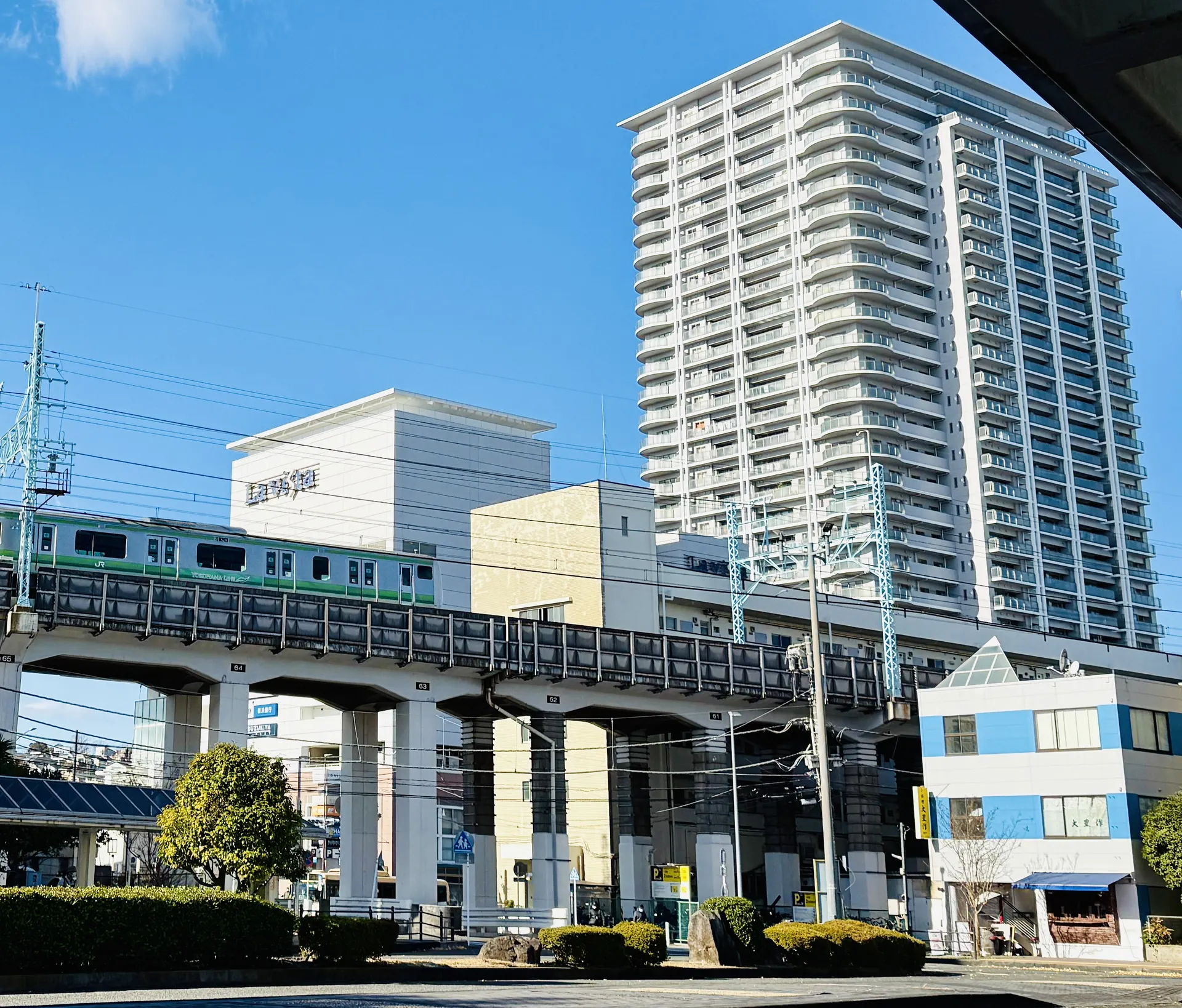
Morning of December 12, 2025, Shin-Sugita Station, waiting for the bus to go to Nyukan
Hello everyone. I'm an IT engineer working in Japan. I created this blog to share about life and experiences during my study and work journey. I hope this article will be helpful to you.